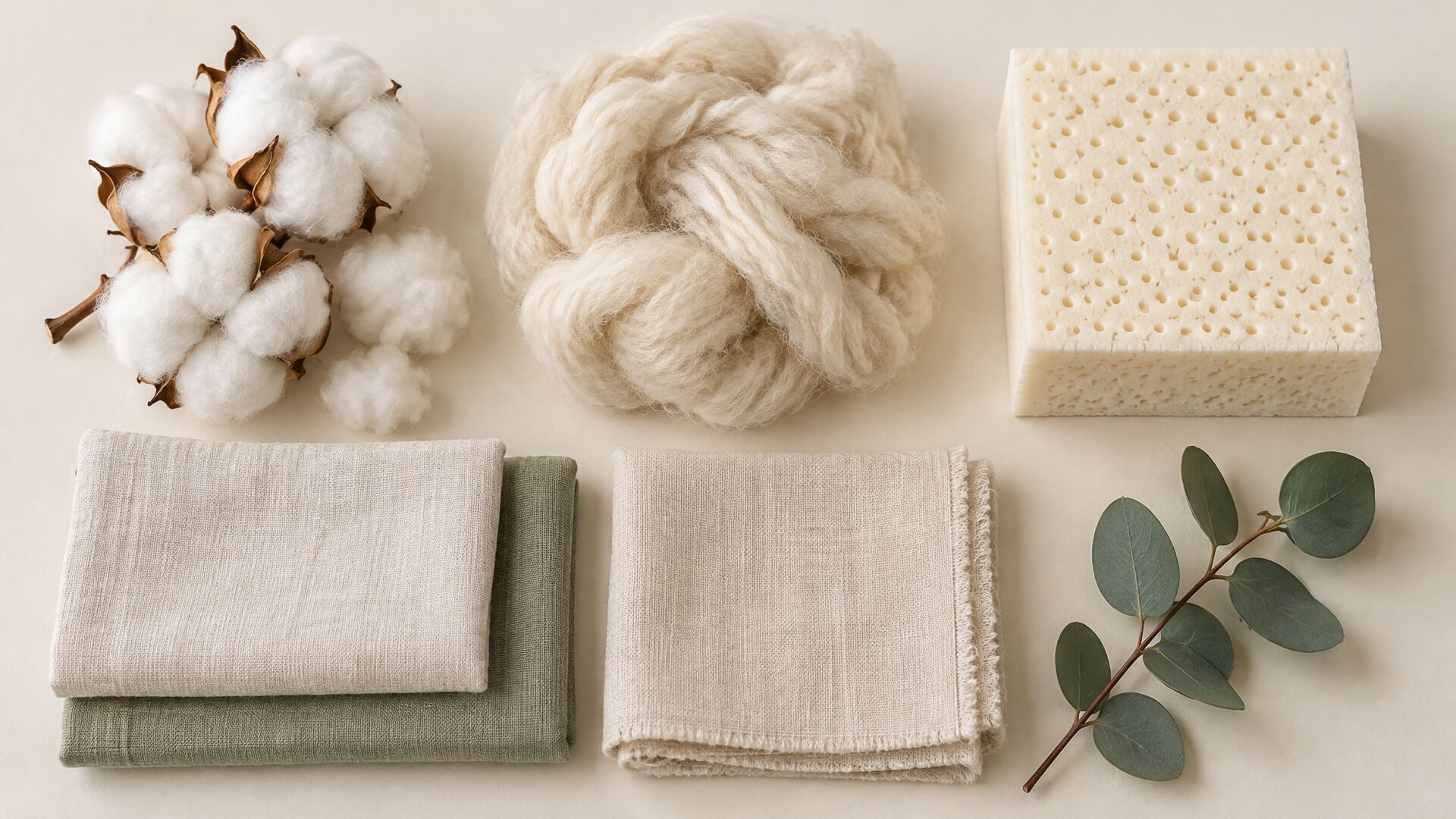
By Frédéric Deltour, Holistic Health Consultant and Professional Trainer
Frédéric Deltour
Holistic Health Practitioner · 20+ Years
The Short Answer
“Organic” is a regulated term. When a mattress component carries GOLS (Global Organic Latex Standard) or GOTS (Global Organic Textile Standard) certification, it means the raw material was grown without synthetic pesticides or fertilizers, and the manufacturing process meets specific environmental and social criteria. These certifications are audited by independent third parties.
“Non-toxic” is not regulated. Any brand can call their product “non-toxic” without independent verification. It generally implies the absence of specific harmful chemicals, but there is no universal standard for what qualifies.
Key Certifications Explained
GOLS (Global Organic Latex Standard)
Certifies that latex is made from organically grown rubber trees. At least 95% of the raw material must be certified organic. Also covers manufacturing practices and chemical inputs during processing.
Who has it: Eco Terra Beds uses GOLS-certified Arpico latex. The Futon Shop offers GOLS-certified organic latex options.
GOTS (Global Organic Textile Standard)
The gold standard for organic textiles. Covers cotton, wool, and other fibers from farm to finished product. Products labeled “organic” must contain at least 95% certified organic fibers; products labeled “made with organic” must contain at least 70%.
Who has it: Eco Terra uses GOTS-certified cotton and wool. Organix Bed uses GOTS-certified organic cotton covers.
OEKO-TEX Standard 100
Tests finished products for harmful substances (heavy metals, pesticide residues, formaldehyde, phthalates, and more). It does not certify organic origin, it certifies that the final product is free from a specific list of harmful chemicals.
Who has it: Eco Terra, The Futon Shop, and One Bed sheets all carry OEKO-TEX certification.
CertiPUR-US
Certifies polyurethane foam for low emissions and absence of specific chemicals (mercury, lead, formaldehyde, phthalates, PBDEs). It does not mean the foam is organic or natural, it means the foam meets safety thresholds.
Who has it: Organix Bed uses CertiPUR-US certified foams in some models. This is why we describe Organix as “non-toxic” but not “organic.”
How to Spot Greenwashing
- Vague claims without certifications: “All-natural” and “eco-friendly” are marketing terms, not certifications.
- Component-level vs. product-level certification: A mattress with an organic cotton cover and synthetic foam core is not “an organic mattress.” Ask what each layer is made of.
- Proprietary “certifications”: If you cannot look up the certifying body independently, question it.
- “Plant-based” foam: This usually means a small percentage of plant oils were used in the polyurethane formula. The foam is still primarily synthetic.
Our Honest Take on Each Partner
We hold our recommended brands to the same standards:
- Eco Terra Beds: Genuinely organic at the component level (GOLS latex, GOTS cotton/wool). Closest to a “true organic” mattress in our lineup.
- Organix Bed: Non-toxic and well-built, but not fully organic. Some layers use CertiPUR-US foams. We say so clearly on every page.
- The Futon Shop: Organic components available (USDA Organic cotton, GOLS latex), but confirm certifications per model as they vary.
- One Bed Sheets: OEKO-TEX certified cotton sheets. Not organic cotton, but tested safe from harmful substances.
The Bottom Line
“Organic” and “non-toxic” both matter, but they are not interchangeable. Organic certifications verify how materials were grown and processed. Non-toxic claims (ideally backed by OEKO-TEX or CertiPUR-US testing) verify what is not in the finished product.
The best approach is to look for both: organic raw materials AND third-party testing on the finished product. And always ask brands to name their specific certifications.
Our Consultant for TaoZeFlow Media Group
Frédéric Deltour
Professional Trainer and Consultant
Sleep is one of the most important aspects of our health, if not the most important of all. As a professional trainer of holistic coaches with over 20 years of experience in integrative wellness, Frédéric Deltour has seen firsthand how better, cleaner sleep transforms overall wellbeing. A certified holistic health practitioner, NLP Master Practitioner, Life Coach, and honored member of the International Holistic Therapists Federation, he holds an internationally accredited diploma in Nutrition and has guided over 500 students worldwide. His approach unifies ancestral wellness traditions, including study with Buddhist monks, Peruvian shamans, and Indian yogis, with modern science. As a consultant for CleanBedGuide, he independently evaluates mattresses, bedding, and sleep products so you can make informed choices without the hype.